
Learn how to add music to YouTube videos the right way (before or after upload) without getting hit by copyright claims or strikes. This step-by-step covers everything from how to add music using the top video editing apps to sourcing music from YouTube’s built-in audio library, and even how to swap out copyrighted songs after your video is live.

And if you’re looking for copyright-safe music that won’t trigger takedowns, Thematic is a free music platform made for YouTube creators. You’ll find real songs from real artists – all cleared for use with no licensing headaches.
Here’s what this guide will cover:
✔️ How to add music using editing apps (iMovie, CapCut, InShot, Canva, DaVinci Resolve, or Adobe Premiere)
✔️ How to add or swap music inside YouTube Studio
✔️ Where to get copyright-safe music for your YouTube videos
✔️ Best practices for exporting video with music
Quick Answer
There are two ways to add music to a YouTube video: edit it in before you upload (using an app like CapCut, iMovie, or Premiere Pro), or add/replace music after upload using YouTube Studio’s built-in editor. For pre-upload editing, download a licensed track, import it into your editing app, sync it with your footage, and export. For post-upload, use YouTube Studio’s Audio tab to add tracks from YouTube’s free Audio Library. Either way, the most important thing is using music you have a documented license for – copyright-safe music from platforms like Thematic prevents Content ID claims before they happen.
Use the table of contents below to jump to the section you need:
- Method 1: Add Music Before You Upload (Using a Video Editor)
- Quick Guide
- How to add music in CapCut
- How to add music in iMovie
- How to add music in Adobe Premiere Pro
- How to add music in DaVinci Resolve
- Detailed Step-by-Step Guide
- Where to find copyright-free music for YouTube videos
- Recommended YouTube export settings
- Tips for crediting music in YouTube video descriptions
- Method 2: Add or Replace Music After Uploading (YouTube Studio)
- How to Make Sure Music Won’t Get Claimed
- Frequently Asked Questions
- The Easiest Way to Add Copyright-Safe Music to Any Video
Method 1: Add Music Before You Upload (Using a Video Editor)
With this method, you edit music directly into your video using your preferred app, then export and upload the finished file to YouTube. You get full control over how the track fits with your footage – timing, volume, fade-ins – using tools like iMovie, CapCut, InShot, and Adobe Premiere.
Quick Guide: Add music using an editing app
Want to add music to your video before uploading it to YouTube? This quick guide will show you how using popular editing apps like iMovie, CapCut, and Premiere.
- Record your video footage.
- Find copyright-safe music you can legally use on YouTube. Platforms like Thematic offer free music from real artists that won’t trigger copyright claims.
- Import your footage and music into your favorite video editing app (e.g., iMovie, CapCut, InShot, Premiere).
- Sync your video with the music track – adjust volume, trim and align clips to fit the audio.
- Export your final video in MP4 or MOV format, using YouTube’s recommended export settings.
- Upload the video to YouTube, add your title/description, and include proper music credits (if required).
- Publish your video and double-check for copyright warnings in YouTube Studio.
✅ Pro Tip: Want to avoid copyright strikes? Try Thematic for free music made for creators.
How to add music in CapCut (for mobile editing)
CapCut is the most popular mobile editing app for YouTube Shorts and TikTok-style content. To add music in CapCut: open your project, tap the Audio tab at the bottom of the editor, then select Sounds to browse CapCut’s built-in library or My music to import a file from your device. If you’re using a Thematic track, download the MP3 to your phone first, then import it via My music. Drag the audio clip to align it with your footage, trim to length, and use the volume slider to balance against any original audio. CapCut supports MP3, M4A, WAV, and AAC formats. Note: CapCut’s built-in library is primarily licensed for TikTok use – for guaranteed YouTube coverage, import your own licensed music using the My music option.
👉 See the full guide: How to Add Music to CapCut
How to add music in iMovie (for Mac users)
In iMovie, open your project and click the Audio browser (the music note icon) to access your music library, or drag an audio file directly into the timeline from Finder. Position the audio clip under your video, trim it to the right length, and use the volume control (the horizontal line on the clip) to adjust levels. For background music, set the track to roughly 20-30% volume so it doesn’t overpower narration or dialogue. iMovie also has a built-in ducking feature (under Audio settings) that automatically lowers background music when it detects speech – a useful one-click option for talking-head or tutorial videos.
👉 See the full guide: How to Add Music to iMovie
How to add music in Adobe Premiere Pro
In Premiere Pro, import your audio file via File → Import, then drag it to the audio track row in your Timeline. Use the audio mixer or the rubber band (the volume line on the audio clip) to adjust levels. For music that needs to fade in or out, add keyframes by clicking the pen tool on the rubber band at the desired start and end points. Premiere Pro’s Essential Sound panel also lets you tag tracks as Music and automatically apply ducking so the music lowers when dialogue is detected – a faster option than setting keyframes manually.
👉 See the full guide: How to Add Music in Premiere Pro
How to add music in DaVinci Resolve
In DaVinci Resolve, switch to the Edit page and import your audio file via the Media Pool. Drag it to an audio track in the timeline and position it below your video clips. Use the Inspector panel to adjust volume, or right-click the clip to add audio levels automation for dynamic volume changes across the timeline. Resolve’s Fairlight page offers full professional audio mixing if you need more granular control – useful for longer videos with multiple audio layers or voiceover that needs careful balancing against music.
👉 See the full guide: How to Add Music in DaVinci Resolve
Detailed guide: Add music to YouTube videos with editing software
Ready for a step-by-step walkthrough? This detailed guide will show you how to add music to YouTube videos with editing software step-by-step.
1. Record the video content for your YouTube video
Before you can add music to YouTube videos, you need the video itself. This can be original footage recorded with your phone or camera, screen recordings, animations, or even still images.
Import your visuals into the video editing app of your choice – like iMovie, Adobe Premiere Pro, CapCut, or InShot.
🛠️ Need help importing your clips? Check out our app-specific guides:
- How to Add Music to CapCut
- How to Add Music to TikTok
- How to Add Music to iMovie
- How to Add Music to InShot
- How to Add Music to Edits (Instagram App)
- How to Add Music to Adobe Premiere Pro
- How to Add Music to DaVinci Resolve
2. Choose copyright-free music for your YouTube video
Music plays a huge role in how your YouTube video feels. The right track can add emotion, energy, and polish to your content – whether you’re making a vlog, tutorial, short film, or product review. But before you hit play on just any song, there’s one critical thing to understand:
When you want to add music to YouTube videos, it’s essential to pick copyright-free or licensed music from trusted sources to avoid getting copyright claims.
🎧 Why You Can’t Use Popular Songs in Your Videos (Even If You Credit the Artist)
Many creators assume that as long as they credit the artist or use a small portion of a song, it’s okay to add it to a YouTube video. That’s a common copyright myth.
In reality, using copyrighted music without permission can result in:
- Content ID claims (which may cause ads to appear on your video and loss of monetization)
- Copyright strikes (which remove your video and impact your channel’s standing)
- Blocked videos (where your video is limited in certain countries or on mobile devices)
For a full breakdown of how copyright works on YouTube and what happens when you use music without a license, check out our full guide: 👉 How Copyright Works on YouTube
✅ What Kind of Music Can You Use on YouTube?
To stay safe and compliant, always use:
- Royalty-free music
- Creative Commons music with proper attribution
- Music from a licensing platform like Thematic that grants you usage rights
- Tracks from the YouTube Audio Library, which are pre-cleared by YouTube
These options ensure your videos won’t get flagged and will remain monetizable (if you’re part of the YouTube Partner Program).
🔥 Where to Find Copyright-Free Music for YouTube Videos
There are a lot of music libraries out there, but not all are truly “free” or safe to use. Here are our top picks for creators:
🎵 Thematic – Free Music for YouTube with No Copyright Claims
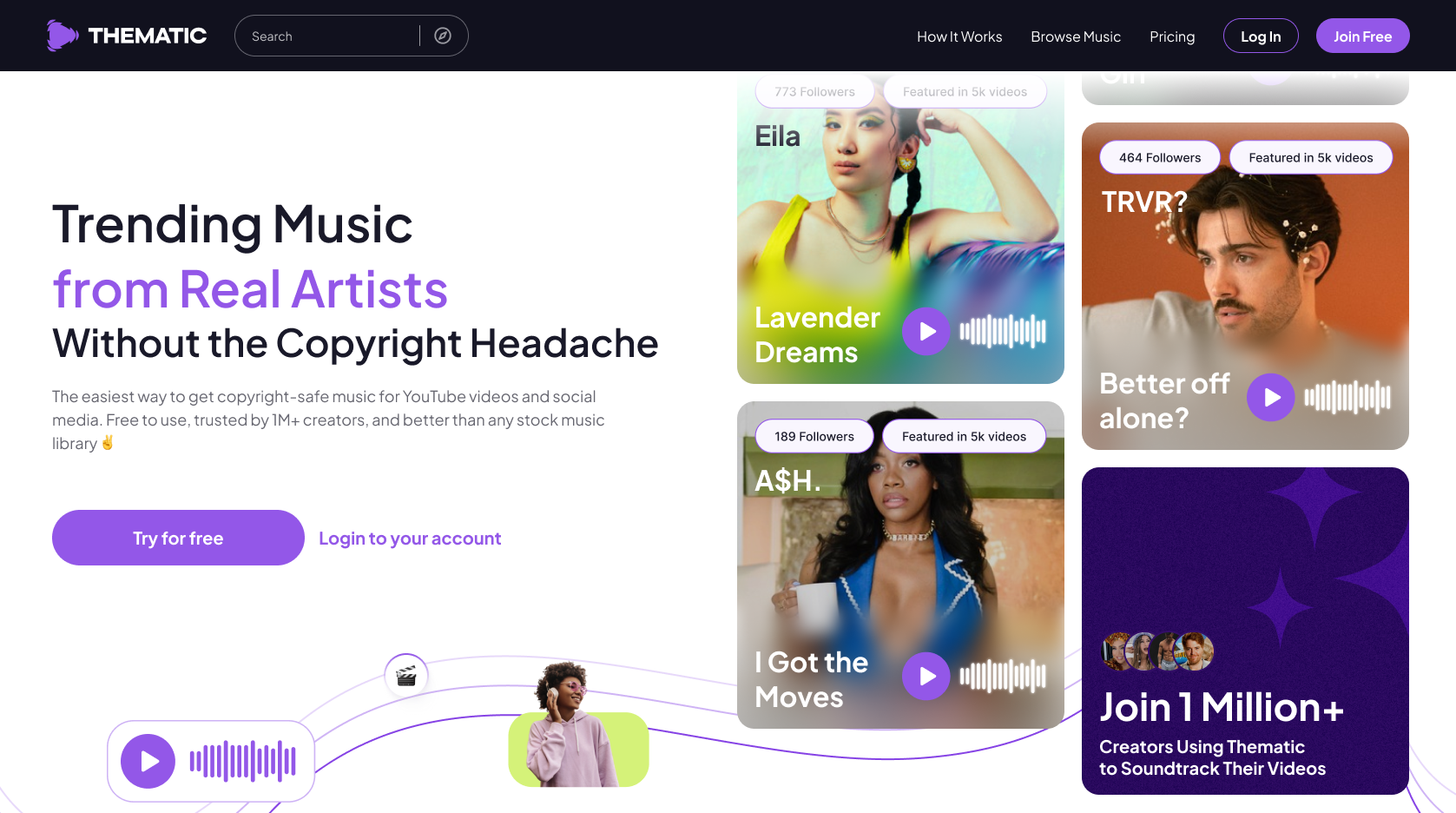
Thematic is a music licensing platform built specifically for content creators. You get access to trending songs from real music artists, and everything is fully cleared for use on YouTube and other social media platforms.
✅ Why creators love Thematic:
- Music from real artists (not stock)
- 100% copyright-safe for YouTube
- Free for creators
- No Content ID claims or takedowns
To use music from Thematic, you simply:
- Sign up for a free account
- Find a song and copy the license link
- Paste that link into your video description when you upload
If you’re ready to level-up your videos with great copyright-free music and join a collaborative and thriving community of creators, click here to sign-up for a free Thematic account today.
🎶 YouTube Audio Library: Songs for YouTube
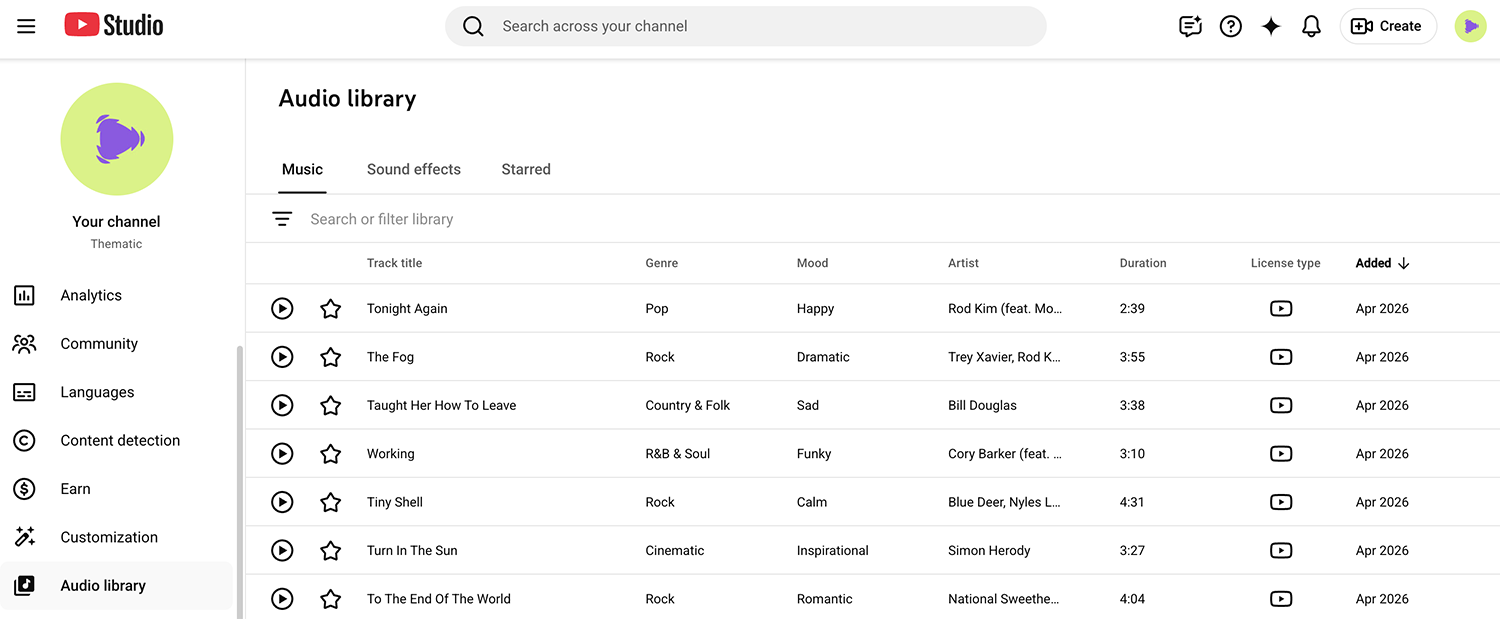
YouTube’s Audio Library is available inside your YouTube Studio dashboard. It offers free music and sound effects that are safe to use in monetized videos. You can filter by mood, genre, length, and attribution requirements.
✅ Pro Tip: For more copyright-free music options for YouTube videos, check out the top free music platforms in our guide: 👉 Best Free Music Websites for YouTube Videos
📝 A Quick Note on Attribution
Even with copyright-free or royalty-free music, always double-check whether the song requires attribution (a credit in your video description). Many platforms (including Thematic) provide a license link or specific credit language you’ll need to copy/paste into your description. We cover exactly how to do that in the How to Credit Music section below.
3. Import your footage and music into your editing app
Once you’ve chosen your music track, download it to your device. Next, open your preferred video editing app (whether it’s iMovie, CapCut, Premiere, InShot, or another) and import both your footage and the music to your editing app to add music to YouTube videos effectively.
👉 Need help importing? Use our editing guides linked above in Step 1.
Now the fun begins! This is where you start shaping your video by syncing your visuals with your chosen music. Watch your creative vision come alive as you combine these elements seamlessly.
A few tips to make your music work for your video:
- Consider placing a powerful or catchy song right at the intro to grab your audience’s attention instantly.
- If your video includes voiceover or talking directly to the camera, use instrumental versions of songs during those sections so the vocals don’t clash or distract.
Keep in mind, this editing stage can take time, especially if your video is longer or the edit is more complex. Be patient and experiment until you feel your video truly reflects the story or mood you want to share with your viewers.
4. Sync your video with the music track
This is where the creative magic happens. Arrange your clips on the timeline and edit your footage to match the rhythm, mood, and beats of the music.
A few editing tips:
- Use cuts or transitions on the beat to make your video feel polished and intentional.
- Place high-energy moments during choruses or instrumental drops.
- If your video includes dialogue or voiceover, use instrumental versions of songs or lower the music volume during speech.
Don’t rush this step! It takes time to get it right, but the payoff in video quality is worth it.
5. Export your video
You want your video to look as best as it can be when shared on YouTube. Thankfully, YouTube has recommendations on how to best format and export your video so that it looks and sounds great for viewers. Below are the best practices and recommended settings to use when exporting videos for YouTube.
Recommended YouTube Video Export Settings
- Aspect Ratio: 16:9
- Resolution: 1080p (1920×1080) is standard, but 4K is ideal
- File Format: .MP4 (H.264 video codec, AAC audio codec)
- Frame Rate: Use the same as your recorded footage (typically 24, 30, or 60fps)
- Audio: Stereo, 48kHz or 96kHz sample rate
👉 Advanced details on the encoded settings can be found in YouTube’s help center.
Before uploading, preview your final file to confirm everything looks and sounds great. Double-check sync, audio levels, and quality.
6. Upload your video to YouTube
You’re ready to share your video to your YouTube channel and subscribers! If you haven’t set-up your YouTube channel yet, you can follow the steps in 👉 this guide to create your YouTube Channel.
Log into your YouTube channel and click the Upload icon (or “Create” → “Upload videos” from YouTube Studio). Then follow these easy steps:
- Select your video file
- Add a title, description, tags, and thumbnail
- Set your audience targeting and visibility settings
- Add optional elements like subtitles, end screens, or cards
- Run a copyright check
- Click Save
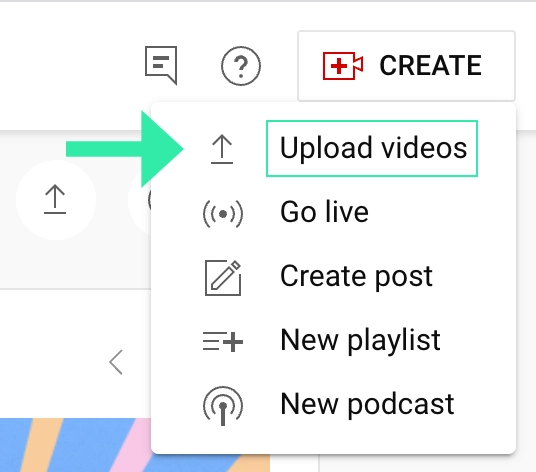
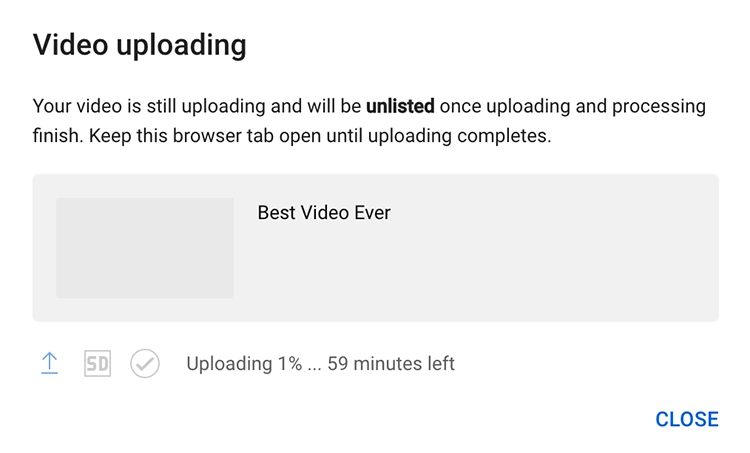
Your video will now begin uploading. You can monitor its progress from the YouTube Studio dashboard.
✅ Pro Tip: See our best practices on how to optimize videos for YouTube here.
7. Publish your video
Once processing finishes, your video is ready to go live! Watch it once in full via the YouTube player to make sure everything works as expected.
If you used copyright-free music (like from Thematic), your video should stay claim-free. But if you do run into any issues, check out our guide on how to fix YouTube copyright claims.
How to credit music in your video description
Always check the specific license terms for any music you use in your YouTube videos. Some music providers or licenses require you to include a clear credit (such as the song title, artist name, and a license link) in your video description.
For example, if you use music from Thematic, you must include the provided license link and credit in your description. This step is essential to activate your music license and protect your video from copyright claims.
Even if the music you use doesn’t legally require credit, it’s still a good practice to include it. Viewers often want to know more about the songs featured, and giving credit is a respectful nod to the artists who created the music.
Here are some best practices:
- Do include the full song title and artist name.
- Do add any required license links or attribution provided by the music source.
- Don’t skip the credit if the license specifically asks for it—this activates your music license and helps keep your video copyright-safe.
- Do credit music even when it’s not required; viewers appreciate knowing the song details.
Example credit format:
Song: “[Song Name]” by [Music Artist] – [Link to Spotify/YouTube Video]
✅ Pro Tip: Including a credit in your description doesn’t automatically grant you permission or a license to use the song. Your video may still be subject to copyright claims. Learn more about this and other common copyright myths here.
Method 2 – Add or Replace Music After Uploading (YouTube Studio)
If you want to add or change music on a video you’ve already uploaded to YouTube, this guide will walk you through using YouTube’s built-in tools and audio library to replace your current music with royalty-free tracks.
How to add background music in YouTube Studio
YouTube’s Audio Library lets you add music to already-uploaded videos right from your YouTube Studio dashboard. Here’s how:
- Go to YouTube Studio and open the Content tab.
- Click the edit icon (pencil) on the video you want to edit.
- In the left menu, select Editor, then click Get Started.
- Click the Audio tab to browse YouTube’s Audio Library.
- Search or filter to find the song you want.
- Hover over the song and click Add to place it on your video timeline.
- Adjust the song’s start and stop points and mix level to fit your video.
- If you change your mind, click the three-dot menu to Remove the song.
- Click Save to apply your edits.
✅ Pro Tip: You can only use songs from YouTube’s Audio Library for this method. For other music sources, use a video editing app to add music before uploading to YouTube.
Screenshots: How to Add Music to YouTube Videos using YouTube’s Video Editor
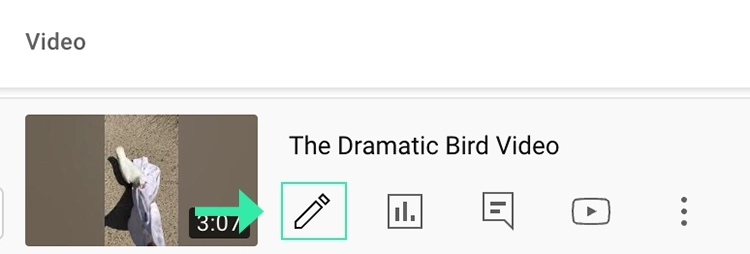
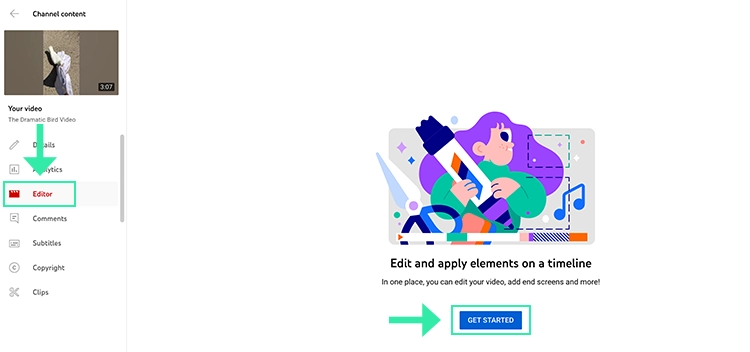
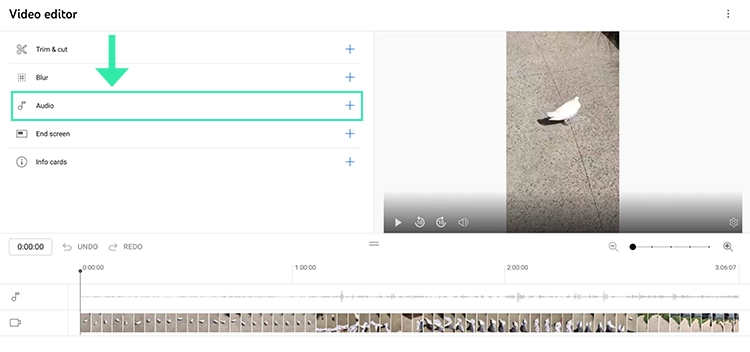
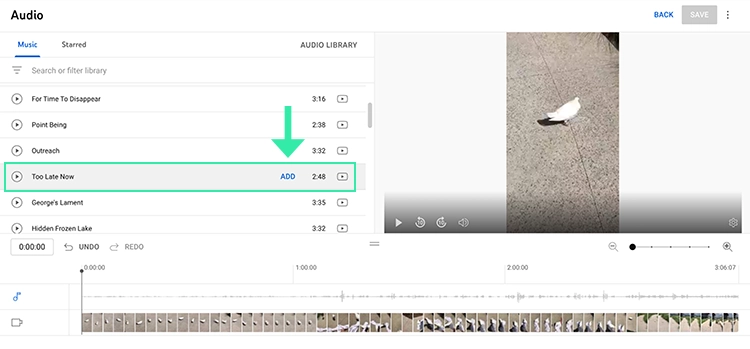
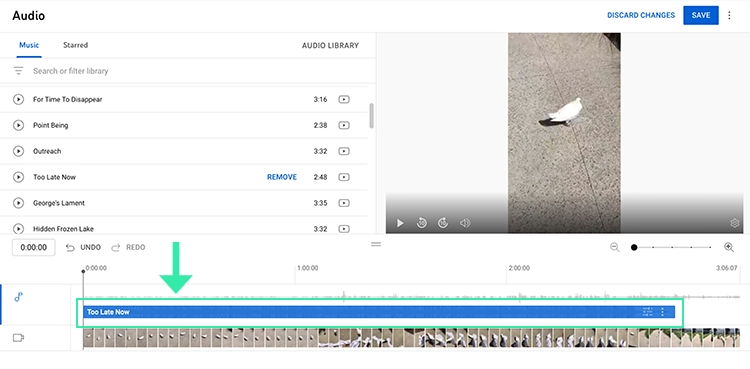
Once you’ve adjusted the songs and your video is looking & sounding great, simply click Save in the top right corner to apply your video edits. There may be a processing time to finalize your edits, but YouTube will let you know once this is completed.
How to replace copyrighted audio in an uploaded video
In the case that you’ve uploaded a video to YouTube and received a copyright claim, YouTube may provide you with an option to replace the copyrighted song in your video. Replacing the copyrighted song will remove and fix the copyright claim on your video immediately.
Here’s how to replace the music in your uploaded YouTube video:
- In YouTube Studio, go to Content and find the video with the copyright claim.
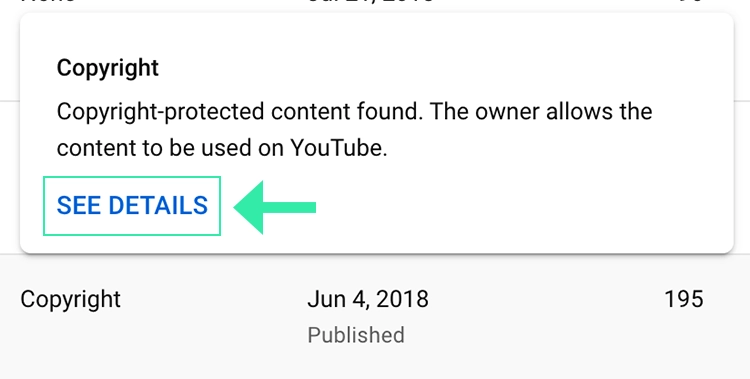
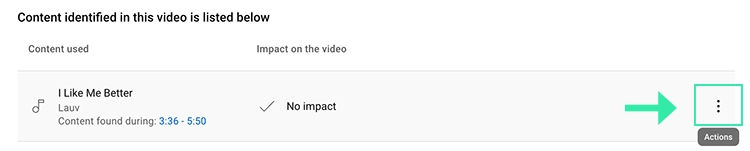
- Hover over the Copyright restriction message and click See Details.
- In the pop-up, click the three-dot Actions menu next to the claimed song.
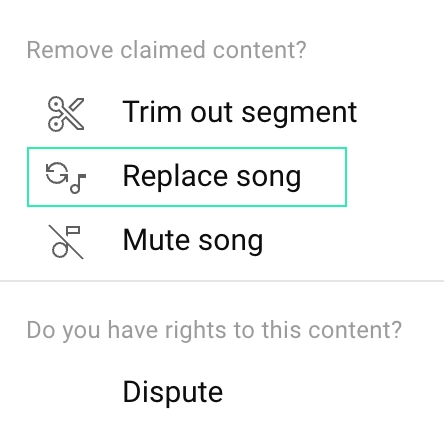
- You’ll see several options to handle the claim:
Trim out segment – Remove the entire portion of the video containing the copyrighted music (including the video footage).
Mute song – Fully mute the copyrighted song’s audio.
Replace song – Swap out the copyrighted song with a track from YouTube’s Audio Library.
Erase song – remove only the copyrighted song, keeping other audio like voiceover or sound effects.
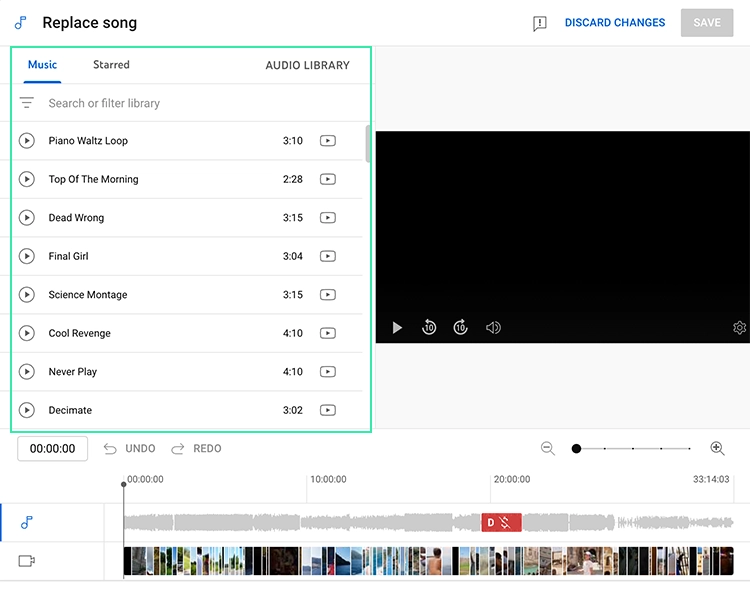
Dispute – Challenge the claim if you believe it’s incorrect or if you have rights to use the music. - Select Replace song to enter the editor.
- Browse YouTube’s Audio Library, pick a replacement song, and click Add.
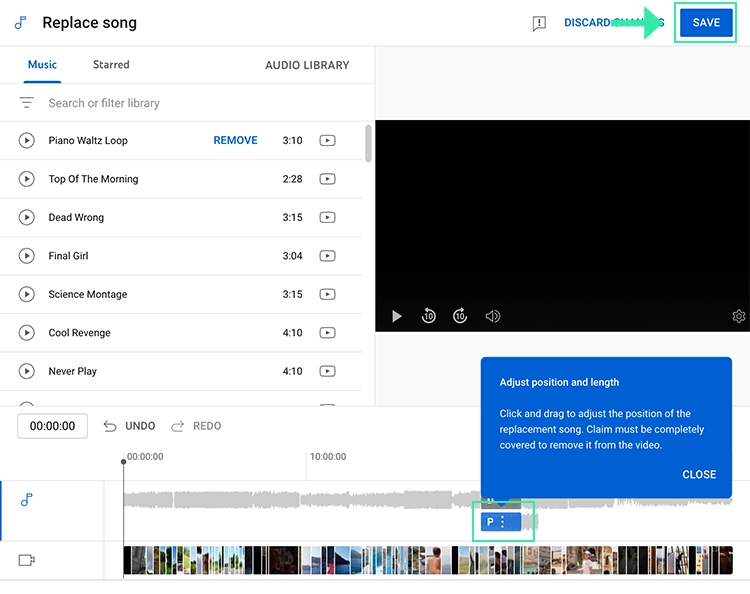
- Adjust the new song’s start and stop timing to fit your video.
- Click Save to apply your changes and clear the copyright claim.
Screenshots: How to Replace Music to Remove a Copyright Claim
Video Tutorial: Add Music to YouTube Videos Using YouTube’s Video Editor
For a step-by-step walkthrough, check out Thematic creator Ben Truong‘s tutorial on using YouTube’s video editor to add music to YouTube videos:
✅ Pro Tip: Need help adding music to YouTube Shorts? See our dedicated guide here.
How to Make Sure the Music You Add Won’t Get Claimed
The safest way to avoid copyright claims is to use music you have a documented license for before you publish – not after. YouTube’s Content ID system scans every video automatically against a database of registered audio fingerprints. Even if you have a valid license for a track, if the rights holder has registered it with Content ID, you may still receive a claim that requires manual dispute.
Two types of music avoid this entirely: YouTube Audio Library tracks (pre-cleared by Google at the infrastructure level) and Thematic tracks (where including the license link in your description activates clearance directly through the Content ID system). Everything else – royalty-free sites, Creative Commons, stock music libraries – may still generate claims that you’ll need to dispute manually with your license documentation. If you want to add music to YouTube videos and never deal with a claim, use one of those two sources.
Frequently Asked Questions
Can I add music to a YouTube video after it’s uploaded?
Yes. In YouTube Studio, go to Content → click your video → Editor → Audio. You can add tracks from YouTube’s free Audio Library directly to the uploaded video without re-uploading the file. If you want to replace a copyrighted track, mute the original audio and overlay a new track using the same editor. Note: this method only adds tracks from YouTube’s own Audio Library – if you want to add a track from outside YouTube’s system, you’ll need to re-edit and re-upload the video file.
What music can I use on YouTube without copyright issues?
Music that comes with an explicit license for YouTube use. That includes tracks from YouTube’s Audio Library (licensed for YouTube only), music from licensing platforms like Thematic (licensed for YouTube, TikTok, Instagram, and podcasts with a single lifetime license), and music you have written commercial licensing for from the rights holder directly. Labels like “royalty free” or “no copyright music” are not guarantees – verify the actual license terms before using any track.
How do I add background music without it overpowering my voice?
Set your music track to roughly 10-20% volume and keep your voice or primary audio at 100%. In CapCut, use the Audio Mix feature to balance tracks directly. In Premiere Pro and DaVinci Resolve, use volume keyframes to automatically lower the music under spoken sections and bring it back up during music-only moments. In iMovie, the background music slider in the Audio tab controls this balance. The goal is for music to be felt more than heard – present enough to set tone, quiet enough not to compete.
Can I use Spotify songs in my YouTube videos?
No – not without a separate, directly negotiated license from the rights holder. Streaming rights (what you get with Spotify) give you the right to listen; they do not give you the right to use the music in your own content. A Spotify song used in a YouTube video will almost certainly trigger a Content ID claim, redirecting your monetization to the rights holder. In some cases the video may be blocked entirely.
Does adding music after upload affect my video’s SEO?
No. Adding or swapping music in YouTube Studio doesn’t change your video’s metadata, title, description, or search ranking signals. The only consideration is that replacing audio may briefly take your video offline while YouTube reprocesses the file – typically a matter of minutes.
How do I replace music on an already-uploaded YouTube video?
In YouTube Studio → Content → Editor → Audio, you can mute the original audio track or replace it with a track from YouTube’s Audio Library. To replace with music from outside YouTube’s library (for example, a licensed Thematic track), you’ll need to re-edit the video file in your editing app and re-upload it. Keep in mind: re-uploading loses your existing view count, comments, and watch time history on the original video. Use the in-Studio editor whenever possible to preserve that data.
What’s the best free music for YouTube videos?
For the widest platform coverage and highest audio quality, Thematic is a strong free option for serious creators – tracks come from real independent artists, include lifetime licenses for YouTube and other major platforms, and won’t trigger Content ID claims. YouTube’s own Audio Library is also free but limited to YouTube use only. NCS (NoCopyrightSounds) is widely used but requires attribution in most cases – check each track’s specific license terms before using.
Will YouTube mute my video if I add copyrighted music?
YouTube can mute the audio on a video if Content ID detects copyrighted music and the rights holder has chosen to block it in certain regions or globally. Muting doesn’t always happen immediately – some videos are flagged hours or days after upload. To avoid muting, use music from a platform that provides a documented license, or use YouTube’s Audio Library directly. If your video has already been muted, you can replace the audio in YouTube Studio without re-uploading.
The Easiest Way to Add Copyright-Safe Music to Any Video
Adding the perfect soundtrack can transform your YouTube videos from good to great. Whether you’re just starting out or editing a video you’ve already uploaded, doing it right is essential to avoid copyright claims and keep your content safe.
From choosing copyright-free music to using popular editing apps or YouTube’s built-in editor, this guide has walked you through every step of the process. Always check the licensing terms and give proper credit when required – it’s both respectful to artists and important for your channel’s protection.
Thematic makes this easy. It’s free, the music is from real independent artists, and every track is cleared for YouTube, TikTok, Instagram, and podcasts. No subscription required – include the license link in your description and you’re covered.
We hope you find this guide on how to add music to YouTube videos super helpful. You’re on your way to creating awesome videos for your YouTube channel and we can’t wait to watch them!
Looking for more creator tools and resources? Visit Thematic’s Creator Toolkit for additional resources on creating content – including starting a YouTube channel, thumbnail and channel art templates, best practices, and of course, great royalty free songs to use in your videos for free with Thematic.